About Veritas Prep

GMAT Prep & Admissions Blog As the world's largest privately-owned GMAT Prep and admissions consulting provider, Veritas Prep maintains a large network of instructors, consultants, and students. Our blog is a way of opening up this community to new visitors and sharing our knowledge about standardized testing, graduate school admissions, and the business world itself.

Friday, July 30, 2010

GMAT Tip of the Week: Data Sufficiency the Nikola Tesla Way

GMAT prepIf you've used electricity in your life, you're undoubtedly familiar with Thomas Edison, and likely pay your electric bills to a company named in his honor. (And if you're reading this, you're using an electronic device, so you are familiar with Edison. Q.E.D.) You may not, however, be as familiar with a man perhaps even more responsible for the electricity you're using to view this blog post: Nikola Tesla.

Tesla, who apprenticed for Edison, helped to make Edison's Direct Current (DC) electrical transmission more efficient and therefore more marketable, but then, against Edison's conservative wishes, branched out on his own to create an even-more efficient electrical system, Alternating Current (AC). (And, in doing so, gave way to the name for one of history's greatest bands, AC/DC...and whose electrical system did they list first?)


Despite Edison's reluctance (and massive anti-AC public relations campaigns to preserve his technology's profitability), Tesla's AC technology won out, essentially because the AC system was more efficient and more flexible. AC technology allows for changes in voltage without the need of expensive conversion machines, and allows electricity to be transported across longer distances. Essentially, Edison's DC systems were "brute force" systems, whereas Tesla's AC was efficient and adaptable, and in the end efficient-and-adaptable won out in the "War of the Currents," the same way that it will for you on the GMAT. How?

Tesla's great advantage was that he could take electricity and adapt it to the required situation. AC allowed low-power items to receive low levels of power, and for higher-power items to receive the higher levels of required power, all from the same source. Electricity, through Tesla, could adapt to the required situation.

The same is true of GMAT Data Sufficiency questions, and in particular those that feature algebra with multiple variables. These questions often provide you with information in an inconvenient fashion, giving you a choice to be made: do you "brute force" them by plugging in a series of values, or do you attack them efficiently-and-adaptably, fitting the information provided to the situation at hand?

Consider this question:

For integers a, b, and c, a/(b-c) = 1. What is the value of (b-c)/b?

1) a/b = 3/5

2) a and b have no common factors greater than 1

At first glance, Statement 1 seems to require quite a bit of work to be useful, as all of the provided information is in terms of a, and the question at hand only involves b and c. Plugging in values of a, b, and c using the 3:5 ratio between a and b could be extremely time-consuming and frustrating.

However, the information provided in the question and in statement 1 can be fitted nicely to the question:

a/(b-c) = 1
a/b = 3/5
What is (b-c)/b?

Taking the first statement and multiplying both sides by the denominator, we find that:

a = (b-c)

Knowing that, we can simply replace (b-c) in the question with a, since we know that the two quantities are equal:

What is a/b?

At this point, the question asks for exactly what statement 1 provides:

a/b = 3/5

So the first statement is sufficient.

By approaching this one like Tesla, valuing flexibility and using the algebra to fit our assets to the question, we can make quick, efficient work of this statement without much effort.

Statement 2 is not sufficient. Simply knowing that a and b have no common factors greater than 1 does not tell us which is which. Since we're asked for a/b, we'd need to know which value is the numerator and which is the denominator, and the statement does not provide for that. Potential values include:

a = 3, b = 5 (both primes, so they don't have any common factors)
b = 5, a = 3 (the same values, but as no order was specified we could simply invert them)

Accordingly, the correct answer is A, as statement 1 alone, but not statement 2, is sufficient.

Ultimately, the GMAT is a test of how you manage resources and solve problems, and few minds in world history have done that better than Nikola Tesla. Train yourself to think that way, fitting your algebraic assets to the Data Sufficiency question stems, and you'll demonstrate to business schools that you have what it takes to be successful (and to rock bands like AC/DC and Tesla that you know where they're coming from).

Are you preparing for the GMAT? Take a look at Veritas Prep's GMAT prep courses and GMAT books, now available for individual purchase. And, as always, be sure to subscribe to this blog and to follow us on Twitter!

Read More >>
Bookmark and Share

Free GMAT Critical Reasoning Online Class for Our Friends in India!

Free Trial GMATThis coming Wednesday, August 4, Veritas Prep will host a free live online GMAT Critical Reasoning lesson for our friends in India. Everyone is invited to attend, but this one has been scheduled to work best for people on IST. The 3-hour class will run from 7:00 PM to 10:00 PM IST.

Taken directly from Veritas Prep's full length, $1,600 GMAT course, this lesson will demonstrate proven strategies for conquering the GMAT's Critical Reasoning questions, representing one of the most difficult facets of the verbal half of the exam.


The class will be taught by Brian Galvin, Veritas Prep's Director of Academic Development and a top-rated U.S. GMAT instructor with over seven years of GMAT teaching experience. After teaching hundreds of students from India and Southeast Asia through his popular online events, Brian would like to take this opportunity to host a session at a convenient time for Southeast Asian students – 7:00 PM IST. We hope that you'll take this opportunity to get Brian's valuable insight and ask him any questions that you have about the GMAT.

After registering for the class, you will receive a confirmation email verifying your enrollment. On August 3rd, the day before the class, you will receive an additional email from Veritas Prep with an electronic copy of the Critical Reasoning lesson booklet and instructions on how to access the live online class.

Also, during the free trial class Brian will unveil a special offer for all GMAT students in India. But you have to resister and attend the online class to get the offer!

You can read more and register here. We look forward to seeing you online next Wednesday!

Photo courtesy of GoonSquadSarah, under a Creative Commons license.

Read More >>
Bookmark and Share

Thursday, July 29, 2010

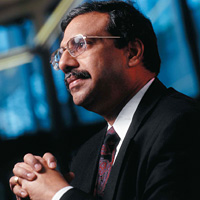
Sunil Kumar Named New Dean at Chicago Booth

Chicago Booth Admissions GuideYesterday the University of Chicago Booth School of Business announced that Stanford GSB's Sunil Kumar will assume the role of Dean at the school. Kumar's appointment ends a search that began seven months ago, after Edward A. Snyder announced in December that he would leave the school at the end of the academic year after serving nearly two full five-year terms at the head of the school.

Kumar, who is currently the Fred H. Merrill Professor of Operations, Information and Technology at the Stanford University Graduate School of Business, will begin his five-year term at Booth starting January 1, 2011. He brings with him an extensive resume of thought leadership in the operations management space. Kumar also is familiar with the role of leading an MBA program, currently serving as Stanford GSB's Senior Associate Dean for Academic Affairs.


This is an interesting appointment on multiple levels. For one, while longtime Chicago Booth faculty member Harry Davis never seemed to be a front-runner for the job, his extensive experience at the school made him someone the search committee had to at least consider. Davis was one of the key players who led the development of Booth's relatively new LEAD program, which represented a very significant change to the school's curriculum. Anyone who thought that Davis would be "too much of an insider" (i.e., unwilling to shake things up if needed) wouldn't need to look any further than that program.

Additionally, over the past decade Booth has certainly spread its wings beyond hardcore quant and finance to gain a more well-rounded reputation among applicants and leaders at other schools. Appointing an "ops guy" like Kumar suggests that the school is comfortable with how far its reputation has come recently, and doesn't feel a need to go any farther than it already has. Ten years ago, we wonder if the school, which has been interested in broadening its branding beyond the stereotype of hardcore quant-types, would have made this same appointment. That's not to say that Kumar's leadership will put a damper on the school's other departments -- everything we've seen about him suggests that he's a well-rounded leader who happens to have a PhD in Electrical Engineering -- but it's an interesting signal about what the search committee thinks the school needs more right now.

Kumar had this to say about his appointment in Chicago Booth's announcement:

"I am excited to become dean of Chicago Booth," Kumar said. "I share the school's passion for the pursuit of ideas that hold up under careful scrutiny. I look forward to helping strengthen and enhance Booth's outstanding research environment and its rigorous, discipline-based approach to business education. I am eager to get to know the faculty, students, alumni, and staff of the school, and to engage with the business community in the city of Chicago."

No doubt about it, Kumar has some large shoes to fill. Snyder's tenure at Booth was arguably the most successful run by any business school leader over the past decade: In 2008 alumnus David Booth donated $300 million, a staggering sum that led to the school changing its name from the University of Chicago Graduate School of Business to Chicago Booth. The school also opened its new state-of-the-art Harper Center, which has significantly improved the quality of life for the student body. And, Chicago Booth's global footprint has also grown significantly over the past decade, with a new campus in London and a planned campus expansions in Singapore. It's hard to argue that any dean has had more of an impact on his or her school over the past ten years than Snyder had.

Getting ready to apply to Chicago Booth? Download our Chicago Booth Annual Report, one of 15 completely free guides to the world's top business schools, available on our site. Every year we help many applicants get into Booth, and we can help you, too. Call us at 800-925-7737 to speak with a Veritas Prep MBA admissions expert today.

Read More >>
Bookmark and Share

Wednesday, July 28, 2010

UVA (Darden) MBA Admissions Deadlines for 2010-2011

The University of Virginia's Darden School of Business recently published its application deadlines for the coming admissions season. Here they are, followed by our comments in italics:

UVA (Darden) Application Deadlines
Round 1: October 14, 2010
Round 2: January 5, 2011
Round 3: March 30, 2011

Like many other top business schools, Darden has moved its Round 1 deadline forward, by two weeks in this case. However, unlike some of those other schools, Darden's Round 1 notification deadline comes in January, after most schools' Round 2 application deadlines. So, if you're waiting on your Round 1 Darden decision, there's a good chance you will have to submit your other apps before you hear back from Darden. The schools' Round 2 and Round 3 deadlines have barely changed vs. last year's.


Darden has also released its 2010-2011 admissions essays (just two of them... short and sweet), which we'll dig into on this blog soon!

Getting ready to apply to business school? Call Veritas Prep at 800=925-7737 and speak with an MBA admissions expert today. And, be sure to subscribe to this blog and follow us on Twitter!

Photo courtesy of Mr. T in DC, under a Creative Commons license.

Read More >>
Bookmark and Share

Tuesday, July 27, 2010

Chad Troutwine in Today's Wall Street Journal on the Value of an MBA for Entrepreneurs

Business School AdmissionsToday on the "Hire Education" blog on the Wall Street Journal, Veritas Prep co-founder and CEO Chad Troutwine questioned the conventional wisdom that business school is no place for aspiring entrepreneurs. Some would-be entrepreneurs see business school as an unnecessary (and costly) pit stop on their way to to startup success, while others actually think that sitting in a classroom and dissecting case studies could actually hurt them in their quest to start a successful company.

Is this true? Could two years in the classroom effectively neuter the world's next Bill Gates or Steve Jobs?


Not so. While it's true that the most successful entrepreneurs contain drive and ambition that can't be picked up in an eight-week business course, those important traits are only modestly useful if one doesn't supplement them with the harder business skills needed to navigate a startup's delicate early years. Managing cash flow, securing investors, identifying target markets to profitably go after... These are the things that even the most ambitious entrepreneur needs to be able to do at some level.

While business schools were slow to embrace the teaching of skills that can benefit entrepreneurs and their early-stage startups, that started to change in the 1990s (partly driven by the tech and dot-com booms). Nowadays its common to find a second-year MBA student whose time is spent almost exclusively in entrepreneurship-related classes, business plan competitions, and pro bono consulting work for local startups. Some of those students even stick around after they graduate, taking advantage of the school's business incubator and related resources.

And, while you're sketching out your business plan, your future leadership team might draw heavily from the people sitting around you in the business school classroom. According to Chad's article:

Graduate business schools offer an unrivaled professional network. Top M.B.A. programs admit between 200 and 900 students each year. Members of the same class, particular those in the same smaller cohort, develop a close bond, one that can last for a career. M.B.A. graduates are privy to the shared experiences of an extraordinary group of professionals. A typical class includes former investment bankers and future venture capitalists (your source of capital), marketers (your brand guru), accountants (your CFO), management consultants (your chief strategist) and other types of industry insiders. Most business schools are also part of a larger university network, further expanding your business relationships. Alumni connections can also provide a source of evangelists for your product or service.

Entrepreneurship will always be a tough game. It's not for everyone. But, by arming yourself with the skills and connections that come with an MBA, you will only increase your likelihood of success.

If you're considering applying to business school, be sure to download our free Annual Reports, 15 completely free guides to the world's top business schools. And, as always, be sure to subscribe to this blog and follow us on Twitter!

Read More >>
Bookmark and Share

Monday, July 26, 2010

Chicago Booth Admissions Deadlines for 2010-2011

Chicago Booth Admissions GuideChicago Booth's online application is now available for the 2010-2011 season. In a few days we'll dig into the school's significantly revamped essays for the coming year, but first we wanted to share Booth's admissions deadlines for the Class of 2013.

While Round 1 and Round have barely changed, there's some interesting news on the Round 3 front that has bigger implications for many applicants' overall timing strategies. We're diving into Booth's deadlines alone today to give enough space to this important lesson.

Here they are, followed by our comments in italics:


Chicago Booth Application Deadlines
Round 1: October 13, 2010
Round 2: January 5, 2011
Round 3: April 13, 2011

Round 1 and Round 2 have each only changed by a day this year, although Booth's Round 3 deadline is now five weeks later than it was last year! We suspect the reason may be similar to the reason that UCLA Anderson gave us before: Top U.S. schools compete with many top international schools to attract great candidates, and many international schools' final deadlines come much later than American schools' deadlines typically do. Booth doesn't want to miss out on a great applicant (who has legitimate reasons for applying in Round 3) simply because the admissions office has already shut its doors for the year.

For any applicant wondering if Round 3 is truly a dead zone in terms of admissions chances, this is an important clue: The school has pushed back its deadline to encourage more people to apply! Round 3 must not be a complete dead end, then. While we still advise that candidates aim for Round 1 or Round 2, don't believe all that you hear about Round 3 being impossible, especially at schools such as Booth that have made changes in their schedules to encourage more applicants to apply in Round 3.


Getting ready to apply to Chicago Booth this year? Download our Chicago Booth Annual Report, one of 15 completely free guides to the world's top business schools, available on our site. Every year we help many applicants get into Booth, and we can help you, too. Call us at 800-925-7737 to speak with a Veritas Prep MBA admissions expert today.

And, as always, be sure to subscribe to this blog and follow us on Twitter!

Read More >>
Bookmark and Share

Friday, July 23, 2010

GMAT Tip of the Week: GMAT Composure the Andy Schleck Way

GMATOne of the most compelling dramas in all of sports took place yesterday in the Tour de France, with Andy Schleck and Alberto Contador -- the two leaders of the race, which ends Sunday -- matching each other's yeoman efforts pedal-for-pedal up one of the world's most intimidating mountain roads, the Col de Tourmalet. Through the fog, up grades of over 10%, surrounded by fans waving flags and cowbells, and well ahead of every other rider in the race, the two riders -- separated after two weeks and thousands of miles by only eight seconds -- put on a battle for the ages.

While winning the respect and admiration of the world, Schleck also won the day although he may have lost the Tour in the process (history suggests that Contador, who owns the eight-second advantage, will extend that lead significantly in tomorrow's Individual Time Trial, the last real opportunity for the riders to separate themselves). And he was able to do it by employing the exact kind of poise that you may need on the GMAT.


Just two days earlier, Schleck proved himself the stronger man in the mountains, at least for that day, attacking Contador with a massive burst of speed and appearing to be on the verge of extending his 31-second lead at the time. Pushing to extend his lead, he flipped a switch on his handlebars to change into a larger gear, and the unthinkable happened -- his chain slipped of the ring in the process, and his bike cruised idly to a stop, leaving him to fix the mechanical problem with his heart beating near its maximum of around 200 beats per minute and his lifelong dreams escaping before his eyes nearly as frantically.

The same may happen to you on test day -- in the midst of a hard problem, you may find that a calculation yields a number unlike any of the answer choices, or that you can't find a way to isolate a variable in a calculation, or that none of the answer choices seems to match with the conclusion of a Critical Reasoning problem. Like Schleck, you may feel the pressure of months of hard work slipping away from you in the blink of an eye, while the clock ticks ever louder giving you less and less time to right the wrong and get back on track. Unlike Schleck's situation, however, a rare gear malfunction that happened at the exact worst moment in one of the unluckiest events in all of cycling, mistakes are bound to happen for you on the GMAT -- you almost certainly will encounter some kind of stress-turned-panic one at least one question.

So how can you react to such a situation? Like Andy Schleck did. Amidst all the chaos and pressure, with his heart beating out of his chest and his lungs craving oxygen at high altitude, Schleck calmly rotated his pedals, threaded the chain onto the sprockets, turned the crank to ensure that it was in place, hopped back on his bike and went back to work. In GMAT terms, he calmly assessed the problem, went back through the same motions he had done thousands of times before, and focused on the task in front of him with little thought about the panic behind him. The result? An event that could have lost him minutes of time only cost him about 30 seconds, and allowed him to take part in yesterday's epic duel with everything on the line and a chance to win the greatest endurance race in the world.

On the GMAT, you'll make mistakes, you'll feel pressure, and you'll see time slipping away. How you manage the situation is what determines your success, and the best way to manage the situation is to go back to the basics. Identify the question you're being asked, think of the strategies that work on those problems, and follow your work calmly to see where you may have been in error. If you can't get back on track efficiently, know that there are multiple battles -- 37 math and 41 verbal -- to be fought, and that you may simply need to limit your time losses on one problem to be ready to fight on the next. Keep your cool and prove to the test -- and those who view your scores -- that you can calmly and efficiently manage stressful situations, and like Schleck you can continue on to bigger and more rewarding challenges with the respect of those around you.

Preparing for the GMAT? Take a look at Veritas Prep's GMAT prep courses and GMAT books, now available for individual purchase. And, as always, be sure to subscribe to this blog and to follow us on Twitter!

Read More >>
Bookmark and Share

Thursday, July 22, 2010

Researching Schools? Begin with the End in Mind

MBAAt this is the time of year we speak with a lot of applicants who are just starting their school research process. How do many of them start? By cracking open the U.S. New rankings or BusinessWeek rankings and going down the list. Sound familiar? The fact of the matter is that how many of us do it, right or wrong!

This isn't necessarily a bad place to start. One has to start somewhere, and no one has yet come up with a better way to size up all of the schools in one neat, tidy place. (Many will argue that there's no reason why all of the top schools should be sorted along one dimension,. While we're actually pretty sympathetic to this argument, human nature isn't changing any time soon.)


One big problem is that many applicants never look deeper to consider what their immediate job opportunities will be when they graduate. Of course, when you walk out of a top-ranked school with an MBA, the world is your oyster, and your job opportunities aren't limited just to the schools that recruit on campus. But, every year we talk to many students and recent grads who are disappointed that job opportunities in their industry/function of choice weren't more readily available through traditional on-campus recruiting.

How can you avoid this problem? It's up to you to know your target schools, including what companies recruit that each school and how many grads go into each industry. Fortunately, this isn't hard information to obtain: Just a simple online search can help you find Harvard's and Wharton's job placement data. While grads at these schools are less often disappointed, even a Harvard MBA sometimes says, "I wish I knew that many of the best private equity firms don't just set up interview slots on campus like other companies do."

And, at lower-ranked schools, you sometimes need to be even more careful. There are dozens of terrific regional programs, but if you attend one and end up disappointed that it didn't help you land a Wall Street banking job, then you may have no one to blame but yourself. As we told the Financial Times a few months ago, you need to begin with the end in mind.

One of the best ways to start researching top MBA programs is to download our Veritas Prep Annual Reports, 15 completely free guides to the world's top business schools. And, be sure to subscribe to this blog and follow us on Twitter!

Read More >>
Bookmark and Share

Wednesday, July 21, 2010

The Rise of the Multimedia MBA Admissions "Essay"

Business School ApplicationImagine the business school application of the future: Rather than spending weeks on dozens of revisions of multiple essays, you sit down at a computer and give short verbal responses to questions, which are recorded via a webcam and uploaded to your target business school's online application system. Sound crazy? It's not necessarily as far away as you might think.

Some MBA admissions officers have begun to experiment with wildly different formats that replace the traditional essay. These multimedia questions, which are completed through such platforms as audio, video and sometimes PowerPoint, are an increasingly common tool used by the likes of the Booth School of Business at the University of Chicago and the Anderson School of Business at UCLA to learn about the "real" applicant, or the person behind the resume, GMAT score and undergraduate institution of record.


And it doesn't stop there. Admissions officers from another top MBA program recently told us that they're considering an even more radical change, asking applicants to do all of their responses via video, and to do them all in one sitting, in a semi-live format. (Imagine a scenario similar to taking the GMAT in a test center... You walk in, do all of your responses at once, and then you're done.) While this is still just an idea, it clearly indicates where admissions officers' minds are.

A shift in the response format of an MBA admissions essay generally indicates that admissions offices were not getting what they needed to make accurate determinations about applicants. Rather than being intimidated by these new multimedia questions, you can think of them as offering a fresh opportunity for applicants to be creative and demonstrate the key qualities that admissions officers look for, including emotional intelligence (also known as "EQ") and capacity for critical thinking and self reflection.

If you're working on one of these "essays," keep in mind these tips for making it great:

  1. A well-prepared audio or video response doesn't come across as an-overly scripted one. While very few applicants can sit down and make a perfect impromptu video or recording in one take, the more an applicant can strike a friendly and not overly formal tone, the more likely the response is to draw in one's audience. Loosen up and speak from the heart -- the last thing an admissions officer wants to see is something that looks or sounds like a hostage reading a prepared statement.

  2. Gimmicks are less effective than you might think. Sure, it's hard for an admissions officer to forget the video of the guy juggling flaming torches, but if the only thing the video communicates is "This guy likes to juggle flaming torches," then that applicant has missed a valuable opportunity to share something meaningful about himself.

  3. Less is more. Many applicants mistakenly assume that a video or a PowerPoint deck gives them the chance to communicate a wide variety of information, more than a written essay ever could. But, just as it can with an essay, trying to cram in too many messages will dilute the effectiveness of the whole product. Keep your response concise and single-minded.

Do you plan on applying to business school this year? Give us a call at (800) 925-7737 and speak with one of our mba admissions experts today. And, as always, be sure to subscribe to this blog and follow us on Twitter!

Read More >>
Bookmark and Share

Tuesday, July 20, 2010

Admissions 101: You Don't Go Into the Interview with a Blank Slate

MBA AdmissionsToday we introduce a new series on the Veritas Prep Blog: Admissions 101. From time to time we'll dig into various basis strategies for getting into the world's top graduate schools, blowing up some dangerous myths along the way.

Today's piece was inspired by the wave of HBS 2+2 Program interview invitations that were sent out yesterday. (Congrats to all of our clients who were invited! There are only about 200 of you!) Soon after learning he had been invited, one of our clients said, "I'm halfway through the door. As long as I don't screw up the interview, I should be in."

Well, that's not exactly how it works.


It's easy for an applicant to look at last year's HBS 2+2 Program admissions statistics and think, "Wow, if they invited around 200 people and last year they admitted more than 100, all I have to do is be in the top half of interviewees and I'm in!" That line of thinking assumes that the admissions process is a perfectly linear one in which the committee cuts down the applicant pool and then starts fresh with the remaining applicants, forgetting everything they already know about them as they go into the interview. This sort of "admissions amnesia" just doesn't happen.

In reality, the admissions office right away knows that it won't admit a large number of applicants (for whatever reason: lack of fit with the program, underwhelming grades, no evidence of leadership potential, etc.), so it makes sense for them to just cut those applicants out of the process right away, since interviewing everyone just isn't practical. (When you go on a first date with someone and just know right off the bat that it won't work out, you don't keep seeing them for a while.) So, they cut down the pool to a more manageable number before sending out invites.

But, as interview invites go out, they already have well-formed opinions about the remaining applicants: "John has terrific leadership experience but we wonder about his quant skills... Mary has very interesting career goals but we're just not sure if an MBA is right for her... Tony brings it all to the table and looks like a very promising candidate." They go into the interview with these opinions and questions, and in large part the purpose of the interview is to help them confirm what they know and find out what they don't know.

(We should note here that HBS is somewhat unique in this regard. Many top schools conduct interviews blind, meaning that the interviewer hasn't extensively reviewed you application. And other schools allow everyone to interview, rather than conducting them by invite only. However, this "the process isn't perfectly linear" point still applies. It all gets fed into the final decision.)

Then -- and here's the important thing to remember -- they then feed that information back into your entire candidacy, and they then decide on what to do with you. You could walk into the interview with them already loving you, and do just okay in the interview, and still get in. You could go into the interview with the admissions committee having lots of questions about your fit with the school, and you could earn rave reviews from your interviewer, but ultimately be rejected because of those questions that were raised before you ever walked in the door.

Both types of examples are very common among applicants. Every year we hear from applicants who say, "I thought I bombed the interview, but I still got in!" and "I was AMAZING in the interview, and my interviewer even said so. So why did I get dinged?" It's because the interview is just one part of the process, and it's compared against everything else in your application before a decision is made. Every part of your application matters right up until the moment when a decision is rendered.

What does this mean for you? For those HBS 2+2 Program applicants, it means that some are already well on their way to being admitted, although they don't know it yet. For others, it means that their odds aren't great, but at least HBS saw enough in them to give them an interview, so they're still very much in the game. For that latter group, the interview will obviously matter more. Since you don't know which camp you're in, you need to prepare for the interview like it matters a ton. But know that everything in your application -- your GMAT score, your essays, your letters of recommendation, your undergraduate work, and your work history -- still matter a lot.

To learn more about the HBS 2+2 Program and what they look for in college undergrads, call us at 800-925-7737. And, as always, be sure to subscribe to this blog and follow us on Twitter!

Read More >>
Bookmark and Share

Monday, July 19, 2010

MIT Sloan Admissions Essays for 2010-2011

Business School GuidesA few weeks after releasing its application deadlines for the coming year, the school has published its admissions essays. Here they are, followed by our comments in italics:

MIT Sloan Cover Letter
Prepare a cover letter seeking a place in the MIT Sloan MBA Program. Describe your accomplishments and include an example of how you had an impact on a group or organization. Your letter should conform to standard business correspondence and be addressed to Mr. Rod Garcia, Director of MBA Admissions. (500 words)

While this isn't an essay in the traditional sense, the cover letter is a rite of passage of MIT Sloan applicants every year. Over the past couple of years the prompt has evolved slightly to place more emphasis on your "impact on an organization." (And regular readers of this blog know how much emphasis we place on demonstrating impact!!) This year the question remains the same, so the Sloan admissions office must think that this phrasing helps them more effectively get at what they're looking for in MBA applicants.


MIT Sloan Application Essays
  1. Please describe a time when you went beyond what was defined, expected, established, or popular. (500 words)

    Sloan added this question last year, and it must have liked what it saw in applicants' responses. Just as the cover letter prompt has evolved to place more emphasis on impact, this change suggests that Sloan is really looking closely for evidence of how you have gone beyond your regular job description to make a positive impact on those around you. We consider this as one of the key ingredients of leadership, and Sloan clearly wants to see more of it in its applicants.

  2. Please describe a time when you convinced an individual or group to accept one of your ideas. (500 words)

    This question is new this year, and it is yet another example of how Sloan is really looking for leaders in its applicant pool. If you just read that last sentence and thought, "Oh no, I've never managed anyone or been a team lead," that's okay. That's not how Sloan (or any top MBA program) defines leadership. One practical definition of leadership is the ability to positively influence others, and Sloan directly asks for an example of that ability with this question. Even if your example feels fairly mundane (such as an engineer convincing other engineers to pursue a certain technical solution), you will be successful if you can show real skill maturity in HOW you go it done.

  3. Please describe a time when you took responsibility for achieving an objective. (500 words)

    This question carries over from last year. Once again, we see a question that gets at signs of leadership. In this case, it's a willingness to take on the burden of achieving a goal. Once again, the "SAR" technique will be critical to demonstrating not just what you accomplished, but also HOW you accomplished it, which is what the admissions committee really wants to see. They don't want to simply hear about how you were handed a goal and you easily achieved it; discuss an instance when you took on an especially challenging goal, maybe when others avoided it or had failed in achieving it, and describe what exactly you did to make it happen.

  4. You may use this section to address whatever else you want the Admissions Committee to know. (250 words)

    Our usual words of warning here... Applicants tend to err on the side of overusing this essay to explain away small details in their profiles. Only use this essay if needed! Two examples are if you have a low undergrad GPA (this is the most common use that we see) or if your current supervisor does not write a recommendation for you. But don't waste the admissions office's time unless you really need to answer a significant question that admissions officers might have about your application.

Getting ready to apply to MIT Sloan? Download our MIT Sloan Annual Report, one of 15 completely free guides to the world's top business schools, available on our site. And, be sure to subscribe to this blog and follow us on Twitter!

Read More >>
Bookmark and Share

Friday, July 16, 2010

GMAT Tip of the Week: Roll Out Those Lazy Days of Summer

GMATNow that the World Cup is over and the majority of the world's population has forgotten again about the Southern Hemisphere, it's safe to say that most of us are enjoying the middle of summer. Summer is more than just a season between the solstice in June and the equinox in September; it's a state of mind and a way of life. Close your eyes and just think of "summer" -- just the notion of it implies to most of us a sense of happiness, relaxation, and comfort. Take Christmas carols out of the mix and summer is easily the most musically-written-about season of all. Admit it -- you have DJ Jazzy Jeff & The Fresh Prince's "Summertime" in your head right now!

Summer, and the music that it inspires, can teach us about how to succeed on the GMAT and in other pursuits. Peak performance tends to come when stress levels are lower, when we feel calm and confident, and when we're enjoying a positive frame of mind. Since summer is generally associated with all of those feelings, embracing our inner summertime can be instrumental in achieving peak performance. As Nat King Cole wrote it, we should "roll out those lazy, hazy, crazy days of summer..." Here's how:


Focus on the lazy!

The GMAT, like life itself, will try to encourage you to work too hard. Also like life itself, however, the GMAT will reward you for finding a simpler, easier way. The key to that is telling yourself that you don't want to work too hard, and that you can find a way to be lazy (which, if you're smart about it, is just another word for "efficient").

Consider this tough Data Sufficiency problem:

What is the remainder when integer n is divided by 10?

1) The tens digit of 11^n is 4

This statement is a tough one -- at first glance it looks impossible, as we're pretty good with units digit properties but don't have very many (if any) hard-and-fast rules for digits to the left of that. It almost seems as though you have two choices: either assume that "n could be anything so there's no way that this works," or start multiplying out 11 after 11 to see if you find a pattern. The multiplication sounds just awful -- after 11^1 as 11 and 11^2 as 121, those values get big in a hurry, and multiplication can be incredibly time consuming.

But does it have to be? After all, this is the GMAT, a carefully-written test that rewards efficient (or just plain lazy) ingenuity. You can't simply assume that "statement 1 doesn't work because n could be anything" -- the GMAT's authors specifically wrote that statement for a reason, and they're not apt to give you a "throwaway." But you also don't have to mindlessly grind out calculations, either -- the authors want to give you that option, but they also write these carefully enough to give you an out if you're clever (or lazy) enough to look for it. Here's that out:

Multiplying by 11 is the same as multiplying by 10 and adding that to the original number (11 = 10+1).

Watch how the exponents of 11 increase:

11^1 = 11
11^2 = 11*10 + 11 * 1 = 110 + 11 = 121
11^3 = 121*10 + 121*1 = 1210 + 121 = 1331
11^4 = 1331*10 + 1331 = 13310 + 1331 = 14641
11^5 = 14641*10 + 14641 = 146410 + 14641 = 161051
and so on...

Notice any patterns?

First, hopefully you've found that multiplying by 11s was easier than expected -multiplying by 10 just means adding a 0 on the end of the initial number, and then adding that original number back in to account for the 11th value.

The units digit is always 1, which should stand out but also be expected (when multiplying two numbers that end in 1 you'll always get a number that ends in 1).

The tens digit is also interesting though -- look at how it increases: 11, 121, 1331, 14641, 161051. The tens digits go from 1, 2, 3, 4, 5.... in lockstep with the value of n, the exponent.

Here is where the GMAT provides you with another decision point. You can either assume that this pattern will continue (not a terrible assumption since it's worked for five values of n in a row, albeit all single-digit values of n which may make them too similar to be proof of an infinite pattern) or try to prove it to yourself. Proving it may seem to take too much math -- we can continue the process we've been doing to make the multiplication easier, but the bigger the numbers get the more time-consuming and error-prone that process will be. Is there an easier way?

Go back to the process we've used for multiplication by 11:

Multiply by 10 -- which means just add a 0 on the end -- and then add the original number back.

Well, every "original" number we have to multiply by 11 has a units digit of 1, which means that when we add the zero on the end of that number it will end in 10, and have a units digit of 10. When we add that back to the original number, then, we're simply increasing the tens digit by adding 1. This pattern will hold infinitely -- we're going to add 1 each time to the tens digit, which means that whenever n ends in a 4, then the tens digit will be a 4. Therefore, the statement is sufficient.

Note that you don't need to (and probably shouldn't) memorize this rule! There's a process for identifying unique number properties when they arise:

Three-Step Process for Unique Number Properties

1) Identify that you are being tested on Number Properties: When a question deals with incredibly large values (or potential values), you're likely to be able to use a number property; when a number asks about units digits, tens digits, etc., you're almost certainly being tested on number properties.

2) Look for a pattern: When you've identified that you're likely to need to use a number property, try to find a pattern using smaller numbers that you can extrapolate to larger ones.

3) Determine why: Once you've identified a pattern, time permitting, try to reason why the pattern holds. If you don't have time, but you've established a recurring pattern, you may need to simply assume that it's much more likely than not that it will continue. But if you can afford the time, and definitely during your homework when time isn't a factor, try to rationalize the reason for the pattern.

The more that you embrace this method, the easier it becomes, and the lazier (er, more efficient) you can be. Finding patterns, and in doing so finding ways to accomplish difficult tasks quickly, is a highly-rewarded thought process on the GMAT, as it is in life. Embrace that summertime spirit of relaxation and calm, and enjoy the rewards that laziness can bring.

Are you preparing for the GMAT? Take a look at Veritas Prep's GMAT prep courses and GMAT books, now available for individual purchase. And, as always, be sure to subscribe to this blog and to follow us on Twitter!

Read More >>
Bookmark and Share

Thursday, July 15, 2010

How to Put the "I" in Application

Law School AdmissionsAn application tip for the graduate school candidate.

Most of our time writing on this blog is spent diving into the nuance and nitty gritty of GMAT prep and the MBA admissions process. Every once in a while, it helps to take a step back and look at things from a very fundamental, building-block level.

Today we are going to take a crack at some armchair psychology -- thinking about why people have such a hard time writing about themselves in graduate school essays and personal statements. Not just the "what to say" part, but also how to say it. Put bluntly, most people produce fairly mediocre prose when it comes to writing about their own lives and goals.


Think back to the process of applying to college and try to recall the most difficult thing about the applications. No doubt it was writing the myriad essays required by each school. What made those so difficult? After all, surely your high school English classes demanded more of you as a writer. The answer is actually pretty simple: you had to write from the "I" perspective for the first time in many years.

From the time we enter elementary school, we are taught to avoid using the word "I" in our writing. Whether in fiction, research, opinion, or reporting, the use of the word "I" is frowned upon by English teachers and grammar purists everywhere. So it comes as no surprise that the task proves difficult when we are asked to do it after years of neglect.

A graduate school applicant has at least been through this once before, but the transition is still uncomfortable. The best thing an applicant can do is become fully aware of this internal struggle. Once you realize that the nagging doubt in your brain is actually the voice of your eighth grade journalism teacher, it becomes much easier to ignore –- nay, destroy – that voice and tackle the assignment at hand. So embrace your inner "I" and enjoy the rare chance to bombard your reader with the most glorious of all pronouns.

For personalized, effective MBA admissions, law school admissions, or medical school admissions help, give us a call at (800) 925-7737 and speak with one of our admissions experts today. And, be sure to subscribe to this blog and follow us on Twitter!

Read More >>
Bookmark and Share

Wednesday, July 14, 2010

GMAC Wants YOU to Help Drive Innovation in Management Education

MBA Admissions ConsultantHave an idea for how the world's top MBA programs should train the business leaders of tomorrow? Think you can do it better than business schools currently do it? Your idea could be worth $50,000. The Graduate Management Admission Council (GMAC) has invited anyone to answer this question: What one idea would improve graduate management education?

The GMAC Management Education for Tomorrow (MET) Fund will award a total of $250,000 in prizes to 15 people whose ideas rise to the top, with the most promising proposal taking home $50,000. All you have to do is submit three paragraphs making the case for your idea is the one that can best revolutionize management education.


GMAC will accept entries to the MET Fund's Ideas to Innovation (I2I) Challenge at www.gmacmetfund.org from Wednesday, July 21, until Friday, October 8. After rounds of review and voting by a panel of educators and business leaders from around the world, the prize winners will be announced in mid-December.

But that's just Phase 1 of the process. During Phase 2, to begin in 2011, GMAC will post the winning ideas online and ask schools and other nonprofit organizations to develop ways to implement them. GMAC will underwrite one or more of the best proposals using funds dedicated to the MET Fund, a $10 million initiative to invest in the development of management education worldwide.

What is "innovation," for the purposes of the contest? GMAC defines innovation as the implementation of an idea that improves management education in a meaningful way—for students, for schools, for societies. GMAC seeks ideas that are achievable, easily understood and able to demonstrate measurable results within one to three years. GMAC is particularly interested in proposals that show potential to broadly impact management education in either a specific part of the world or globally.

If you've got an idea that will get GMAC's attention, visit www.gmacmetfund.org and get started. Good luck!

Thinking of applying to business school this year? Give us a call at (800) 925-7737 and speak with one of our business school admissions experts today. And, as always, be sure to subscribe to this blog and follow us on Twitter!

Read More >>
Bookmark and Share

Tuesday, July 13, 2010

Former Kellogg Dean Dipak Jain to Lead INSEAD

Dipak JainOn Friday the Financial Times reported that INSEAD is expected to announce that Dipak Jain, former Dean of Northwestern University's School of Management, will replace Frank Brown as Dean of INSEAD. While it's not yet official since INSEAD's board and faculty need to approve the appointment, Jain is widely expected to get the nod later this month.

Jain, who served as Dean at Kellogg from 2001 to 2009 (the FT erroneously reports that Jain assumed the Dean's job at Kellogg in 1994), worked his way up the ranks after joining Kellogg as an assistant professor in 1987. For much of the 1990s he served as Don Jacobs' right-hand man, helping to implement Jacob's vision to build on Kellogg's strengths as a marketing and teamwork-oriented MBA program. When Jacobs stepped down in 2001, it was only natural that Jain took the reins at Kellogg.


What may have most attracted INSEAD to Dipak Jain is his international experience, and in particular his enthusiasm for building better business education in Asia. INSEAD's Singapore campus, which opened just ten years ago, reflects the school's ambitions beyond France. Jain, who strengthened Kellogg's ties to Asia and was also a key player in getting the Indian School of Business off the ground, seems perfectly suited to the task of continuing to expand INSEAD's influence in Asia.

Interestingly, the Financial Times also points out that INSEAD's appointment of Jain may also reflect a trend among Europe-based business schools to get back to having academics, rather than people who come from industry, in the top leadership posts. Recently London Business School and IMD have replaced deans "from industry" with new leaders with more purely academic credentials. We wonder if any other business school leaders will be swept out as the ramifications of 2008's economic meltdown still ripple through the education field.

If you're considering applying to INSEAD or Kellogg, be sure to download our free Annual Reports, 15 completely free guides to the world's top business schools. If you're ready to start building your own application to a top MBA program, call us at 1-800-925-7737 and speak with an MBA admissions expert today!

Read More >>
Bookmark and Share

Monday, July 12, 2010

Go Around the World with Veritas Prep and Win $5,000 in Prizes + 40% Off a GMAT Course!

Veritas Prep on FacebookTo celebrate the worldwide reach of our GMAT courses (we have 87 locations in 16 countries and offer live online courses) we are hosting an Around the World Facebook photo contest! Everyone is invited to submit a picture of themselves wearing a Veritas Prep t-shirt or holding Veritas Prep books and the person with the picture that receives the most votes will get his or her choice of the following prizes:


Don’t worry, even if you don’t win, EVERYONE who enters the contest will receive 40% off any Veritas Prep GMAT course as well as 20% off our admissions consulting and private tutoring services. If you don’t have a Veritas Prep t-shirt, all you need to do is send an email to aroundtheworld@veritasprep.com with your shirt size and shipping address and we will ship you a t-shirt free of charge.

To Enter:
On the Veritas Prep Facebook page, click on the Around the World tab and enter the contest. Once you are on the contest page, you can submit a picture for a chance to win and/or invite friends to participate in the contest or vote for your entry.

After entering, please email aroundtheworld@veritasprep.com to let us know the services that interest you, and we will get you all set at the discounted rates. The Around the World contest provides a great opportunity to save money on our services while helping to bring the Veritas Prep community closer together. The deadline for submitting a photo is July 23rd so please act soon if you are interested!

Read More >>
Bookmark and Share

Friday, July 9, 2010

GMAT Tip of the Week: Problem Solving the LBJ Way

GMATThere are big decisions in life, and then there are BIG DECISIONS. You'll make some pretty important decisions on the GMAT, so you should want to consider the methodology of how to best make these choices. And few of those BIG DECISIONS can compete with some of those made by one of the world's most prominent figures of the last century, LBJ.

Lyndon Baines Johnson (what, you were expecting another LeBron James article today?) in his nearly six years as U.S. President was tasked with some absolutely huge decisions: how to deal with the Vietnam conflict, what to do about the growing need for civil rights reform, how to put a man on the moon... "The Sixties" are remembered as a monumentally revolutionary decade in American and world history, and LBJ presided over the vast majority of it, making big decision after big decision.


How, other than the timely LBJ/LeBron James made-you-look reference, is this relevant to your GMAT studies?

Much like your situtation on the GMAT, most of LBJ's was inherited - the questions facing him were not as much part of an agenda of his choosing, but rather issues that were thrust upon him. He took office after the assassination of John F. Kennedy, inheriting the task of bolstering a nation in shock. At the time he took office, the conflict in Vietnam was already underway with thousands of U.S. troops on the ground; Kennedy's guarantee of a man on the moon by the end of the decade had already been made; racial tensions were reaching a head in the aftermath of Brown v. Board of Education and with the evolution of multiple powerful civil rights groups and leaders.

Johnson, like you as a GMAT examinee, had no choice but to answer the questions that faced him. And, like you should on test day, he did so by taking the issues and making them his own, pushing for, among other things, a "Great Society" agenda to leave office better than he found it. On the GMAT, you will undoubtedly face problems that you simply wish not to, but as LBJ found the best way to handle them is to make them your own.

Consider the problem:

&$ * $& = &@&

In the multiplication problem above, &, $, and @ represent different, nonzero digits, and the product of & and $ is less than 10. What is the value of the two-digit number &$?

A) 11
B) 12
C) 13
D) 21
E) 31

Tricky, eh? Like taking office and having to confront civil rights and a growing military conflict all at once...

The keys to these problems are to make them your own by writing down what you know. Here, we can start with a couple quick things that we know to get started:

1) We're dealing with unique digits, which means that choice A, 11, isn't a possibility, so at least that's out of the way.

2) We're dealing with individual digits, and not numbers, so they're probably testing some kind of number property - and one that we know they test a lot when looking at individual digits in multiplication is a unit's digit property. Stacking the multiplication vertically can help to better gauge that:

&$
$&
_____
&@&

With the unit's digit rule in mind, we know that multiplying $ * & leaves us with &. In other words, multiplying & by $ keeps it the same. What number, when multiplied, keeps the other the same? 1. So now we know that the $ is 1, making our problem:

&1
1&
____
&@&

Since the problem is asking for &$, and we know that $ is 1, then we also know that choices B and C, which put the 1 in the tens place and not the units, are incorrect. Now we're down to two choices: 21 and 31.

We need to replicate that repeating digit, so it may just make sense to multiply out our options:

21 * 12 = 252 (replicates that repeat)
31 * 13 = 403 (does not replicate the repeat)

So 21 * 12 is the problem that works, and we know that our answer has to end in 1, so it must be 21, or choice D.

Often times, the GMAT will create a uniquely complex situation for you, and your best option is to make decisions by breaking out the complexity into smaller steps of your own. If you can unpack both the things that you know and your GMAT "guiding principles" (like number properties), you can take these complicated situations that you inherit and turn them into logical, systematic decisions.

Are you preparing for the GMAT? Take a look at Veritas Prep's GMAT prep courses and GMAT books, now available for individual purchase. And, as always, be sure to subscribe to this blog and to follow us on Twitter!

Read More >>
Bookmark and Share

Thursday, July 8, 2010

Michigan (Ross) Application Essays for 2010-2011

Free Business School GuidesA couple of weeks after releasing its application deadlines for 2010-2011, the University of Michigan's Ross School of Business has released its admissions essays for the coming year. Ross has made some very significant changes to its essays this year. While the school's Round 1 deadline is still more than three months away, now is a great time to start mapping out your application strategy, starting with these essays.

Here are Ross's admissions essays, followed by our comments in italics:


Michigan (Ross) Admissions Essays
  1. Introduce yourself in 100 words or less.

    Wow... Short and sweet! This question is new this year, and it's the quintessential "elevator pitch." You have just four to six sentences to highlight what the admissions committee absolutely must know about you. This is not an exercise is seeing how much information you can cram into 100 words. Instead, your challenge is to distill down your candidacy to no more than several key points that 1) demonstrate your fit with Ross and 2) help you stand out vs. the competition. This essay will be a super-summary of the rest of your application, so don't be bothered if some of the content here seems to overlap with what's in your other essays.

  2. Describe your career goals. How will the Ross MBA help you to achieve your goals? (500 words)

    This question is also new this year. It is essentially the typical "Why do you want an MBA, and why this school?" question. Remember to keep it realistic and to demonstrate that you understand what a Ross MBA will and won't do for you as a young professional. Note that many similar questions start with "Describe your career progress to date," but this essay is only forward-looking. Still, any discussion of your career goals will likely include at least some background on what you've learned and accomplished. So, you should plan on succinctly discussing what you've done until now.

  3. Describe a time in your career when you were frustrated or disappointed. What did you learn from that experience? (500 words)

    This question is also new, and replaces a question on last year's application that asked for an applicant's most significant professional accomplishment. This new question gets much more at the "emotional intelligence" that we hear admissions officers talk about wanting to see in applicants. While this isn't explicitly a "failure" essay, an example of a time when you failed is fair game here. Other possibilities are a time when you had to deal with a difficult co-worker or a time when you had a hard time winning others over to your way of thinking. These would all make for good demonstrations of how you've dealt with adversity. And remember that the second half of this question is the most critical: What did you learn from this rough patch in your career? (And, how did it make you a better person or more successful professional later on?) That's what Ross admissions officers most want to know.

  4. Select one of the following questions:

    • What are you most passionate about and why? (300 words)

    • We expect that Ross MBAs will not only be effective leaders, but also effective teachers. How will you contribute to the learning experience of your peers at Ross? (300 words)

    Both of these questions are new. The first one is very much like Stanford's famous "What matters most to you, and why?" question, and requires an honest response about something that truly moves you. Again, the second half of the question is the meatiest part: You can be passionate about anything, but what really makes great responses stand out is when the "Why" part is memorable, believable, and contains specifics about how you have acted on that passion. Are you passionate about bicycling? Great. Now explain why, using specific examples... All in 300 words!

    Regarding the second question, when you hear the word "diversity" used to describe a business school classroom, this goes beyond race or gender. This also refers to the experiences (both personal and professional) that you bring to the classroom. Your job here is to demonstrate those experiences and convince the Ross admissions office that you'll actively contribute these in the school's "action-based learning" environment. Ross doesn't want wallflowers in the classroom, so don't look like one!

  5. Optional question: Is there anything else you think the Admissions Committee should know about you to evaluate your candidacy? (500 words)

    As always, only use this essay if you need to explain a low undergraduate GPA or other potential blemish in your background. No need to harp on a minor weakness and sound like you're making excuses when you don't need any. More generally, if you don't have anything else you need to tell the admissions office, it's okay to skip this essay!

If you want to learn more about the Ross School of Business, download our Ross Annual Report, one of 15 completely free guides to the world's top business schools, available on our site. And, as always, be sure to subscribe to this blog and follow us on Twitter!

Read More >>
Bookmark and Share

Wednesday, July 7, 2010

Will Video Kill the Classroom Star?

Online GMAT PrepThe Huffington Post recently ran an interesting column by Jodi Beggs, in which she contends that the advent of online education has the potential to create a winner-take-all model for education similar to that of the entertainment or sports industries: With the world having access to the world's best, a few superstars, she predicts, will captivate the attention of the masses while the more regional, smaller-scale stars will fade in popularity. Similar to how the world will (claim not to but ultimately still decide to) watch LeBron James announce in a one-hour primetime special this Thursday which team has the right to pay him millions of dollars, top teachers would be in a position to reach the masses all at once, and their just-not-quite-good-enough counterparts will, like those slightly less talented than James, fade toward the obscurity of the small-town circuit.


As purveyors of both online education and in-person, regional education, we at Veritas Prep were fascinated by the contention, which spurred on some conversation about the topic. For one, we applaud any development that allows top instructors to share their talents with the world. Veritas Prep's Live Online GMAT courses have attracted students from Central Asia, South America, Eastern Europe, and the South Pacific -- small markets for GMAT prep that now, by the advance of technology, have access to worldwide Instructor of the Year winners.

Those instructors, in turn, have lauded the ease of interaction in the live online format, noting that receiving and answering student questions can be just as convenient online as it is in person, and that forming student-instructor rapport has been almost surprisingly easy to do. Stories of Philadelphia-based students wondering how to FedEx a favorite cheesesteak and beer to a California-based instructor as a thank-you, or of American instructors meeting up with international students during airport layovers just to finally put a face with the name, have become much more commonplace than we ever expected. The benefits of online education have been quick to come and easy to embrace, and Veritas Prep instructors, students, and administrators alike feel fortunate to be on the edge of a new and exciting trend.

Should Great Teachers Be Worried?
In opposition to the "video killed the educational star" mentality, however, are some of the same points that have made many of us such fans of online education. Ask any Veritas Prep instructor or student what has impressed them most about the Live Online format and they're likely to mention in their short list of benefits that ease of interactivity and of building rapport -- items that remain possible when classroom sizes are manageable, but that wouldn't be the case under the proposed winner-take-all model. Watching LeBron James play basketball or Eminem perform in concert doesn't require any interpersonal connection -- their talents can be admired from afar without the need for the viewer to ask for clarification or for the performer to check for understanding.

Similarly, and perhaps even more of a contrast, a concert performance or basketball game comes with one primary goal to the consumer: entertainment. Should the viewer miss a song to accept a phone call or leave a game early to beat traffic, that cost-benefit analysis belongs solely to the viewer's preference. In education, however, the goal is true understanding, which requires a higher level of engagement and commitment than does entertainment. Particularly when knowledge must be constructed upon other knowledge, missing a demonstration to take a phone call or turning off a class early can have repercussions that impact learning significantly.

Different Strokes for Different Folks
Just as there are known difference between visual and audial learners, we predict (and have seen evidence) that there are differences between in-person and online learners. As you decide which format is best for you, ask yourself how you may learn best. Are you typically prone to staying engaged in educational pursuits and participating in class? If so, then you may thrive in an online environment. Do you have a tendency to become distracted easily and try to multitask? An online classroom that exists just a mouse click away from the rest of the internet may prove to be less than ideal in keeping you engaged. Do you tend to view an instructor as part "knowledge dispenser" and an equal part "personal trainer"? You may want to ensure that you're working in a format that allows you to connect with your instructor personally to derive that motivational benefit. Do you often feel intimidated or embarrassed to participate in class as much as you'd like? A more-anonymous online format may be just the cure, allowing you to participate without the seemingly-judgmental eyes of your classmates.

So, will video kill the classroom star? Probably not. Video stars will undoubtedly be born, and deservedly so, but education is a unique world in which multiple methods of delivery are required. As any good teacher knows, the key to effective instruction is to provide learners with various methods of education so that each learner is in a position to construct knowledge in a way that allows her to build mastery of a subject. In the evolving world of educational technology, students will have opportunities to decide between elite instructors in a less interpersonal setting (be that an in-person lecture or an online video series) and more-interpersonal experiences with other instructors. As educators, we believe that our role is to eliminate the need for substantial trade-off between these options and to provide students with win-win decisions of this type, and we're confident that students in that situation will make the right decisions for themselves.

Want to see great GMAT instruction first-hand? We have GMAT prep courses starting around the world next week! And, as always, be sure to subscribe to this blog and to follow us on Twitter!

Read More >>
Bookmark and Share

Tuesday, July 6, 2010

Duke (Fuqua) Admissions Deadlines for 2010-2011

Business School Application GuidesA few weeks after announcing its admissions essays for the coming year, Duke University's Fuqua School of Business has announced its application deadlines for 2010-2011 (click on the "When to Apply" tab on the Fuqua site). Here they are, followed by our comments in italics:

Duke (Fuqua) MBA Application Deadlines
Early Action: September 30, 2010
Round 1: November 1, 2010
Round 2: January 4, 2011
Round 3: March 8, 2011


Fuqua's Early Action deadline has crept forward into September, making it one week earlier than it was last year. Note that, while most schools use the term "Early Action" to indicate that the decision is non-binding, Fuqua considers it to be binding. So, we only recommend applying in this round if you're 100% certain that you want to attend Fuqua. The school's Round 1 deadline has moved forward by almost two weeks, and its Round 2 deadline has crept up by a couple of days, so that it's now right after the holiday break. If you're waiting to hear back from some other schools before applying to Fuqua in Round 2, you'll need to get the ball rolling on your Fuqua application before you know your fate at those other schools. Duke's Round 3 deadline is virtually the same as it was last year.

For more advice on getting into Fuqua, download our Fuqua Annual Report, one of 15 completely free guides to the world's top business schools. If you're ready to start building your own candidacy for Harvard or another top MBA program, call us at 1-800-925-7737 and speak with an MBA admissions expert today!

Read More >>
Bookmark and Share

Monday, July 5, 2010

Summer GMAT Prep Classes Start Next Week!

GMAT Prep ClassesWe thought we'd take a quick break from the holiday (what, you didn't get July 5 off??) to let you know that we have GMAT prep classes starting around the world next week! If you're planning to apply to a top business school this coming fall, now is the perfect time to get started on your GMAT preparation.

Why? Because starting your preparation now will put you in position to take the GMAT by mid August. If you ace it, then great. You can put the GMAT out of your mind and start planning the rest of your application. If not -- and that's totally normal and okay -- then you still have time to take it again before the Round 1 deadlines come in early October.


If you haven't yet taken the GMAT and want help in maximizing your score, you're in luck. We have classes starting in dozens of cities worldwide this coming week, in all sorts of formats -- weeknights, weekends, Saturdays-only, accelerated, and online GMAT courses. You name it, we've got a GMAT class for it. And taking our 42-hour, seven-week Complete Course (our most popular option) will leave you with plenty of time to take the GMAT in July, setting up the calendar for you beautifully in the back half of the year.

Ready to dig in and reach your maximum potential on the GMAT? Visit our site for a GMAT course overview to see why thousands of applicants choose Veritas Prep every year. Then, find a GMAT course near you and register. If you enroll late, don't worry... We'll work with you to make sure you don't miss a thing!

As always, be sure to subscribe to this blog and to follow Veritas Prep on Twitter so that you don't miss a beat in the worlds of GMAT prep and MBA admissions!

Read More >>
Bookmark and Share

Friday, July 2, 2010

GMAT Tip of the Week: Do What You Do Best

GMATAdmit it -- as much fun as the World Cup has been, you're looking forward to the return of sports in which American superathletes dominate. Landon Donovan's 91st minute goal to win the pool was great, but nil-nil ties and inferiority to both -guays (Para- and Uru-) isn't the kind of thing Americans can really get behind.

What we can get behind are big wins, big personalities, and big history, and this weekend, as we celebrate the very existence of America itself, we get to watch one of the biggest winners that the U.S. has ever produced compete on a big stage: Lance Armstrong rides again.


Nicknamed "Mellow Johnny" in an intentional Americanization of the phrase "maillot jaune" (French for "yellow jersey," the shirt worn by the leader and eventual winner of the Tour de France), Armstrong is typically far from mellow in his intense approach to training, competing, and life in general. But lately he's been more relaxed in interviews, eluding to things in life that are more important to him than winning. He's a full-time cancer crusader and part-time cyclist, and admits that his return to cycling the last two years has had more to do with the platform it's given him to raise awareness about cancer than with his zeal for winning. Embedded within that is an important GMAT lesson for you:

As you attempt to solve large-scale problems, find opportunities to do what you do best.

For Armstrong, fighting cancer has been made easier by cycling, as that's what he does best. For you on the GMAT, it will be extremely helpful for you to approach problems by remembering the things that you do well and finding chances to apply those, and in doing so not allowing yourself to be trapped into performing calculations or using concepts that are time-consuming on a path to nowhere.

Consider the case of exponents. The rules that you know for exponents all relate to multiplication:

x^a * x^b = x^(a+b)
(x^y)^z = x^(yz)
etc.

By the time you take the GMAT, you should be very good at manipulating exponents when multiplication is present. But, on the other hand, we're awful at using exponents when we're adding and subtracting terms. Consider the following question:

What is 3^8 + 3^7 - 3^6 - 3^5?

(A) (3^5)(2^4)
(B) (3^5)(2^6)
(C) (3^6)(2^5)
(D) 6^5
(E) None of the above

Again, because we're not that great when it comes to adding and subtracting exponents, we need to find a way to do what we do well, which is multiplying. With that in mind, if we factor the original equation, we can start that multiplication process. Factor out a 3^5 from each term to get:

(3^5) (3^3 + 3^2 - 3 - 1)

Because the parenthetical term on the right deals with numbers that we can calculate pretty easily, and because we know from the answer choices that we'll likely need to get that term in terms of the number 2, let's calculate that out:

(3^5) (27 + 9 - 3 - 1)
(3^5) (32)
(3^5) (2^5)

Now, we have our algebra in the same terms as the answer choices, but it doesn't match those terms A, B, or C. Again, though, think about what we're good at -- we're good at multiplying exponents! If we rephrase our expression, we can manipulate it a bit to get:

(3^5)(2^5)
(3*2)^5
6^5

And the correct answer is D.

With problems that look complicated, it's helpful to find the scope of what needs to be done and then ask yourself what in that realm you do well. Your "core competencies" on the GMAT will be your guiding lights as you approach all kinds of questions, so keep in mind that, among other things, you're great at multiplying exponents, breaking down numbers into prime factors, performing using calculations using fractions, etc. Just like Lance Armstrong is much better at riding a bike than he is at public speaking or fundraising (no knock on those abilities -- he's just the world's greatest on a bike!), you're much better at the above skills than at many others, so look for opportunities to put them to use!

Getting ready to study for the GMAT? Take a look at Veritas Prep's GMAT prep courses and GMAT books, now available for individual purchase. And, as always, be sure to subscribe to this blog and to follow us on Twitter!

Read More >>
Bookmark and Share

Thursday, July 1, 2010

Introducing Veritas Prep's GMAT Prep Books!

GMAT Prep BooksWe have big news to announce! Today, on our 8th birthday, we introduce our GMAT prep books for individual purchase! These are the same books that we use in our industry-leading 42-hour GMAT prep course, and they contain everything that tens of thousands of students have learned in a Veritas Prep class.

For years students have been asking us to sell our books individually. We always resisted since we carefully control every aspect of our classroom instruction, but after years of having to tell students "sorry!" when asked if they could buy our books, we have decided to make them available for the first time ever, on our site and on Amazon.com.


Veritas Prep students know that our approach to GMAT prep is based on the premise that excelling on the exam is not about what you know, but rather how you think. After all, business schools aren't necessarily looking for algebra whizzes or grammar teachers, but rather potential managers who can efficiently and effectively make quality decisions -- an idea that was reinforced by the Graduate Management Admission Council's recently announced new Integrated Reasoning section. Therefore, effective GMAT prep requires training test-takers to think about the test's content like a business manager, and Veritas Prep's revolutionary GMAT prep methodology does just that.

Our new GMAT preparation books include:
  • Math Essentials

  • Arguments

  • Arithmetic

  • Critical Reasoning I

  • Critical Reasoning II

  • Algebra

  • Sentence Correction I

  • Sentence Correction II

  • Geometry

  • Reading Comprehension

  • Data sufficiency

  • Statistics and Problem Solving

  • Analytical Writing Assessment

  • Advanced Word Problems and Quantitative Review

  • Combinatorics and Probability

Veritas Prep's GMAT books are available on our site and on Amazon.com.

Thinking beyond books for your GMAT preparation? See a GMAT course comparison and see why more and more people choose Veritas Prep every year. And, as always, be sure to subscribe to this blog and to follow us on Twitter!

Read More >>
Bookmark and Share
 
Featured in Alltop Member of the Boxxet Network of Blogs, Videos and Photos Academics blogs alternative Blogs - BlogCatalog Blog Directory